How to Build Software: Accounting Fraud Detection
I've gotten several questions on how you might implement Benford's Law, which was a previous post I wrote. If you haven't read it and you aren't familiar, you'll need to look it over for this to make sense.
As a reminder, non-random numbers (which includes financial transactions) should occur at the following frequencies for their first digits:
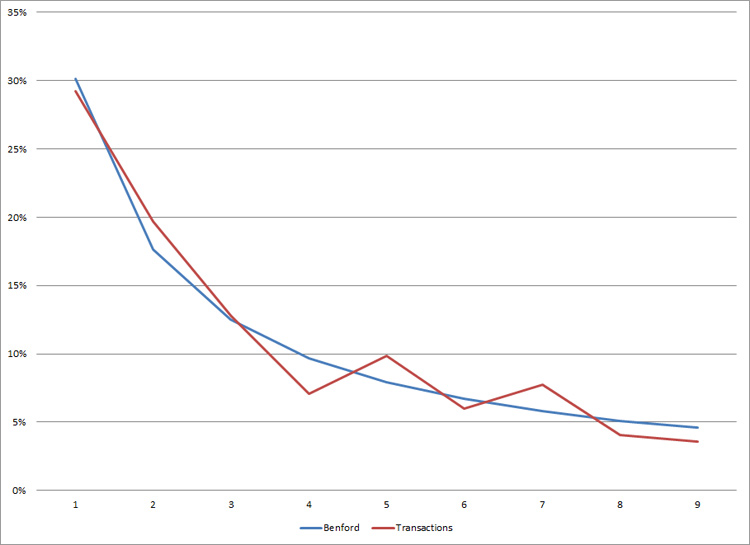
We will keep this C# code fairly straightforward so anybody can try it out. Therefore, rather than a database or anything too fancy, we'll just import values from a CSV file stored at C:\Transactions.csv on your local drive. We will then import each row as a decimal into an array.
private static double[] GetTransactionsFromFile()
{
    try
    {
        string[] allLines = File.ReadAllLines(@"C:\Transactions.csv");
        double[] allTransactions = new double[allLines.Length];
for (int i = 0; i < allLines.Length; i++)<br />        {<br />            double lineValue;<br />            if (double.TryParse(allLines[i], NumberStyles.Currency, new CultureInfo("en-US"), out lineValue))<br />            {<br />                allTransactions[i] = lineValue;<br />            }<br />            else<br />            {   <br />                Console.WriteLine("Line #" + (i + 1) + " is not a valid dollar amount. Please fix and restart the program.");<br />                return null;<br />            }<br />        }
return allTransactions;<br />    }<br />    catch(FileNotFoundException ex)<br />    {<br />        Console.Write(ex.Message);<br />        Console.WriteLine(" Did you copy the example file or create a new file at that location?");<br />    }<br />    return null;<br />}<br /></pre>
This line of code, excerpted from the above section, will properly remove currency and commas, based on the computer's locale.

double.TryParse(allLines[i], NumberStyles.Currency, new CultureInfo("en-US"), out lineValue)

This will pull the first digit of every value in the array:

private static double[] GetFirstDigitFrequency(double[] allTransactions)
{
    double[] firstDigitFrequency = new double[10];
for (int i = 0; i < allTransactions.Length; i++)<br />    {<br />        int firstDigit = int.Parse(allTransactions[i].ToString().Substring(0, 1));<br />        firstDigitFrequency[firstDigit]++;<br />    }
return firstDigitFrequency;<br />}<br /></pre><br />This will output any first digits that don't fall within a tolerance of 50% above or below the expected rate of occurrence. It omits first digit frequencies that lack any transactions and also throws a warning if you don't have at least 25 transactions.<br /><pre class="brush: csharp; title: ; notranslate" title=""><br />private static void OutputResults(double[] firstDigitFrequency)<br />{<br />    double allowedTolerance = 0.5;<br />    double total = firstDigitFrequency.Sum();<br />    double frequencyPercentage;<br />    double benfordPercentage;
if (total < 25)<br />        Console.WriteLine("You have a low number of transactions which reduces the effectiveness of the test.");
for (int i = 1; i < 10; i++)<br />    {<br />        if (firstDigitFrequency[i] == 0)<br />            break;<br />        frequencyPercentage = firstDigitFrequency[i] / total;<br />        benfordPercentage = Math.Log10(1 + 1.0 / i);<br />        if ((frequencyPercentage < (benfordPercentage  (1 - allowedTolerance))) || (frequencyPercentage > (benfordPercentage  (1 + allowedTolerance))))<br />            Console.WriteLine("Review transactions with a first digit of: " + i);<br />    }
Console.WriteLine("Complete.");<br />}<br /></pre>
The complete source code:

using System;
using System.Globalization;
using System.IO;
using System.Linq;
namespace ClarkOnCode_FraudDetection
{
    class Program
    {
        static void Main(string[] args)
        {
            double[] allTransactions = GetTransactionsFromFile();
            double[] firstDigitFrequency = GetFirstDigitFrequency(allTransactions);
OutputResults(firstDigitFrequency);<br />            Console.ReadLine();<br />        }
private static void OutputResults(double[] firstDigitFrequency)<br />        {<br />            double allowedTolerance = 0.5;<br />            double total = firstDigitFrequency.Sum();<br />            double frequencyPercentage;<br />            double benfordPercentage;
if (total < 25)<br />                Console.WriteLine("You have a low number of transactions which reduces the effectiveness of the test.");
for (int i = 1; i < 10; i++)<br />            {<br />                if (firstDigitFrequency[i] == 0)<br />                    break;<br />                frequencyPercentage = firstDigitFrequency[i] / total;<br />                benfordPercentage = Math.Log10(1 + 1.0 / i);<br />                if ((frequencyPercentage < (benfordPercentage  (1 - allowedTolerance))) || (frequencyPercentage > (benfordPercentage  (1 + allowedTolerance))))<br />                    Console.WriteLine("Review transactions with a first digit of: " + i);<br />            }
Console.WriteLine("Complete.");<br />        }
private static double[] GetFirstDigitFrequency(double[] allTransactions)<br />        {<br />            double[] firstDigitFrequency = new double[10];<br />            for (int i = 0; i < allTransactions.Length; i++)<br />            {<br />                int firstDigit = int.Parse(allTransactions[i].ToString().Substring(0, 1));<br />                firstDigitFrequency[firstDigit]++;<br />            }<br />            return firstDigitFrequency;<br />        }
private static double[] GetTransactionsFromFile()<br />        {<br />            try<br />            {<br />                string[] allLines = File.ReadAllLines(@"C:\Transactions.csv");<br />                double[] allTransactions = new double[allLines.Length];
for (int i = 0; i < allLines.Length; i++)<br />                {<br />                    double lineValue;<br />                    if (double.TryParse(allLines[i], NumberStyles.Currency, new CultureInfo("en-US"), out lineValue))<br />                    {<br />                        allTransactions[i] = lineValue;<br />                    }<br />                    else<br />                    {   <br />                        Console.WriteLine("Line #" + (i + 1) + " is not a valid dollar amount. Please fix and restart the program.");<br />                        return null;<br />                    }<br />                }
return allTransactions;<br />            }<br />            catch(FileNotFoundException ex)<br />            {<br />                Console.Write(ex.Message);<br />                Console.WriteLine("Did you copy the example file or create a new file at that location?");<br />            }<br />            return null;<br />        }<br />    }<br />}<br /></pre>